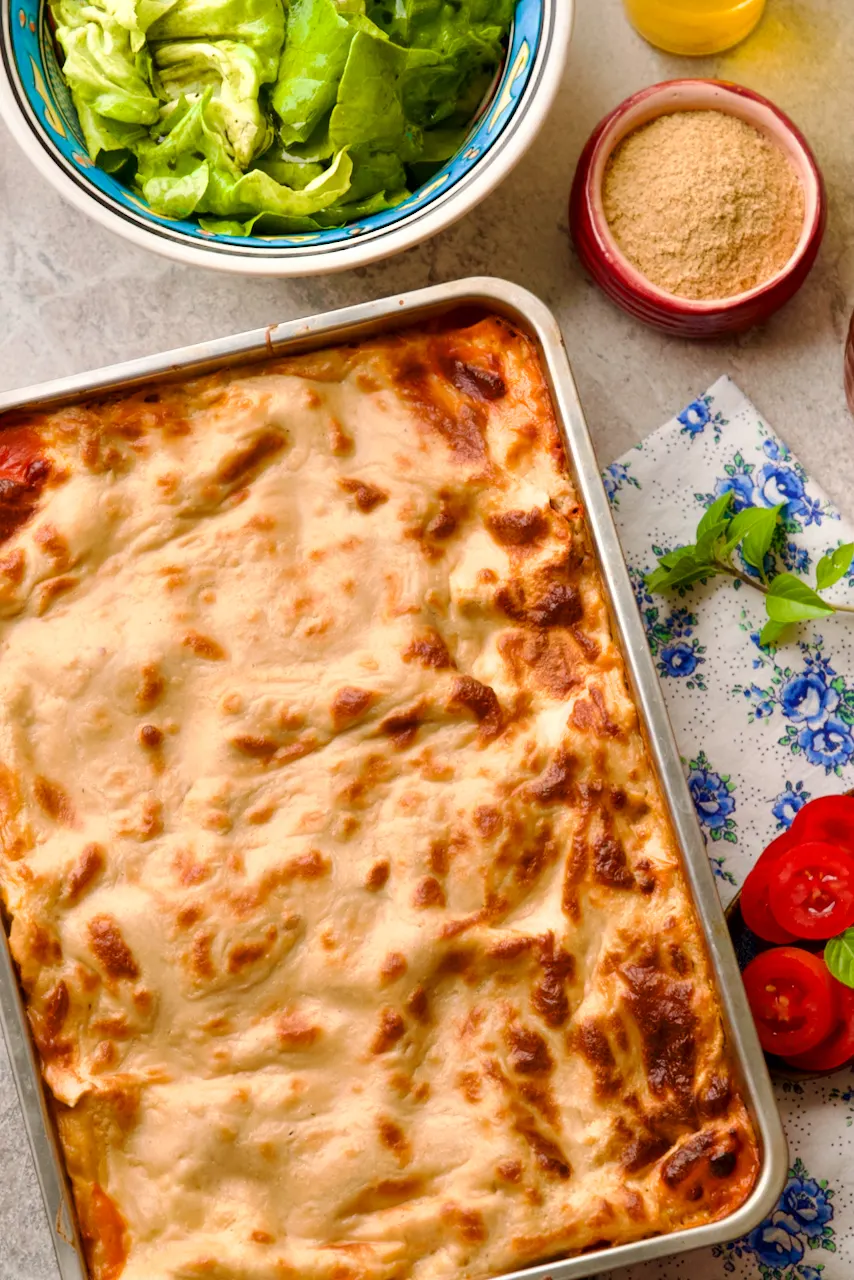
Some dishes are unforgettable. This Vegan Lasagna is the one I’d make to show how delicious plant-based cooking is. It’s the recipe I always recommend first.
At the edge of town, in a little clearing beneath a crooked old elm, stood a small food truck. It was run by a curly-haired cow named Mabel and a very talkative ferret named Pip. Pip did the cooking and most of the talking while Mabel was quiet, patient, and good with numbers. She kept the books, calculated the daily takings, filed the taxes, and had a habit of solving complicated mathematical problems on scraps of paper while eating lunch. One Tuesday, Pip announced that the truck needed a new signature dish. “Something extraordinary, that makes people say, ‘Good heavens, what is happening in my mouth?’” Mabel munched thoughtfully on her lunch. Then she pointed her nose toward the river. Everyone in town knew the beaver who lived there. He managed the river gates, reinforced the banks, and had personally calculated the safe daily wobble of the Wobblewater.

So they went to find him. The beaver, whose name was Bernard, lived in a sturdy little lodge beside the river, surrounded by stacks of timber, measuring sticks, and what appeared to be several hundred carefully labeled boxes of twigs. He was skeptical when Pip explained that they needed help inventing a new pasta dish. “I don’t cook,” Bernard said. “I eat and... I build, that's about it” Mabel sat quietly on a nearby log and ate the lunch she had brought with her. It was a bowl of penne. Bernard happened to glance at it. “That,” he said, “is a structural disaster.” Pip blinked. Mabel continued chewing. Bernard pointed at the bowl. “Those noodles are different lengths. The sauce is pooling at the bottom. Some noodles receive far more sauce than others. Look here!” He poked one with a twig. “This noodle has received practically nothing.” Mabel swallowed, considered the bowl, and gave a moo of approval. Pip’s ears perked up. “So you're saying there is a problem that needs fixing?” Bernard contemplated. There was, unmistakably, a problem.

Within an hour, Bernard had spread blueprints across his workbench beside the dam. “We need a pasta architecture that distributes sauce evenly, maintains lateral stability, and guarantees an equal quantity of crispy edge per customer.” Bernard sketched, erased, measured, and muttered. “If the sauce load is transferred across the longitudinal plane, then the quadrant-axial torsion should...” Mabel glanced over the figures and gave a soft, approving moo. “Exactly Mabel,” he said. “The quadrant-axial torsion during baking needs to be zero.” He drew another line. “Of course.” After several hours, they had created something quite professionally looking.

They baked it. When it emerged, crispy and bubbling, the three of them stood silently before it. It looked less like pasta than a small, delicious square building. Bernard poked it cautiously. Pip sniffed at it. “I think, we may have invented a new kind of dinner,” Pip said. From behind them came a voice. “It smells delicious.” A duck stood at the edge of the river, staring at the steaming pan. “Can I maybe have a piece?”. “I suppose,” Bernard said, “we still need to test the structural integrity.”
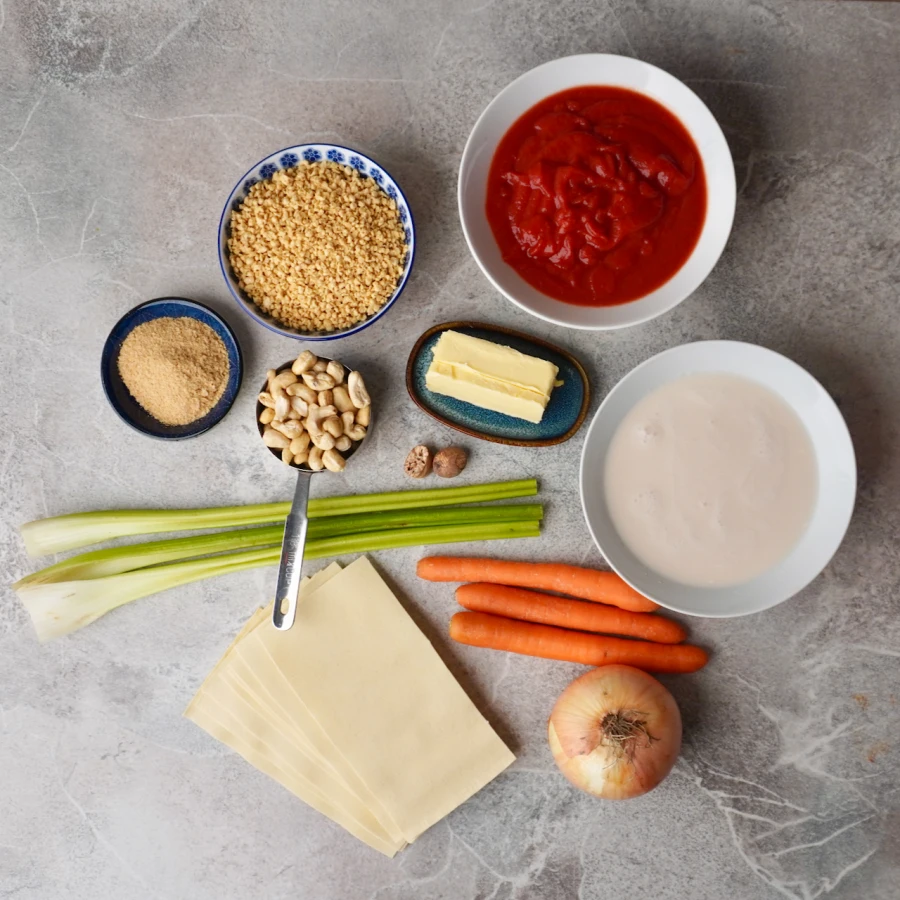
Ingredients for Vegan Lasagna
- Carrots, Celery, Onions
- Lasagna Sheets
- Vegan Butter
- Cashews
- Nutritional Yeast
- Plant Milk
- Tomato Sauce
First things first, what about the cheese?
For this recipe, we are skipping the dairy entirely, so there is no traditional cheese, milk-based béchamel, or ricotta. I also decided not to use store-bought vegan cheese alternatives. Their availability varies so much depending on where you live, and their taste and melting behavior can be a bit unpredictable. That doesn’t mean you can’t add your favorite vegan cheese on top before baking if you want to, though! Instead, we are making a thick, creamy béchamel sauce using a base of plant milk, cashews, and nutritional yeast flakes. This sauce works great between the layers and on top. Plus, with the right oven settings, it even gets browned and crispy. You won’t miss the dairy at all, I promise!
Is this vegan lasagna meal-prep friendly?
If you are looking for the absolute perfect meal prep dish, there are probably better alternatives out there. While this vegan lasagna lasts up to three days in the fridge (just don’t leave it sitting out on the counter for too long!), it does tend to get a little soggy and dry over time. Personally, I usually eat half the day I make it, pop the rest in the fridge overnight, and reheat it the next day. So while it might not be a week-long meal prep champion, it will absolutely sort you out with dinner for two solid days, unless you are exceptionally hungry or have company!
My Top Reheating Tip: You can use the oven or microwave, but I get the best results by reheating slices in a pan over medium heat with a little olive oil and a lid on top. It helps revive the texture pretty good!
Is there a secret to the ragù (or bolognese)?
There absolutely is, and it’s the secret ingredient behind almost any dish with a savory, unforgettable flavor: time and patience. If you have the time, roast some eggplants, let the sauce thicken and simmer with a splash of red wine, and let it sit for a while to develop its flavors before assembling the lasagna. Depending on the type of vegan mince you use, you might also want to let it soak and then roast it slowly in the pan to dry it out a bit before adding the rest of your ingredients. This gives can give it a less watery and meatier texture. When I do it, adding roasted eggplant, mushrooms, and fresh herbs to the sauce are absolute musts!
In a rush? Don’t shy away from simply using your favorite store-bought bolognese. It’s the easiest, least fancy way to go about it, but delicious nonetheless.
What kind of protein can I use for the meat layer?
I usually go the easy route and use Textured Vegetable Protein (TVP), like dried soy mince. You just soak it in some hot, salted water before roasting it up in a pan. Other great alternatives I’ve tried are simply crumbled tofu or your favorite store-bought vegan ground meat. If you choose a basic option like TVP or crumbled tofu, that is my usual technique: roast it separately from everything else before adding it to the sauce. Both TVP and tofu can taste a bit boring if they aren’t seasoned properly on their own, and roasting them first helps dry them out so your vegan lasagna doesn’t end up watery.
If you want something more whole-food-based, making a lentil bolognese with chopped walnuts is also a fantastic option. It’s a bit more time-consuming, but absolutely worth it! (I will link my recipe here once it’s up!)
How do I stop my vegan lasagna from becoming dry, soggy, or watery?
To prevent your lasagna from turning into a dry brick or a mushy puddle, there are two very important rules I always follow:
1. Check Your Pasta Package Instructions
Your sauces are already cooked before they go into the dish, so the final texture is entirely up to the pasta sheets. Always check the package instructions for your specific noodles. Different brands use different thicknesses and flours, meaning their oven times and temperatures vary. Ignoring these instructions is the fastest way to end up with either crunchy, dry sheets or overcooked, soggy mush.
2. Let the Lasagna Rest Before Cutting
Once you pull the lasagna out of the oven, let it sit for at least 5 to 10 minutes before cutting into it. It will be too hot to eat right away anyway! Letting it rest gives the layers time to settle, firm up, and absorb any excess moisture. If you cut it immediately, the hot sauces will just run everywhere (and burn your mouth).

How to make the Best Vegan Lasagna
Ingredients
- 1 package Lasagna Sheets
Ragu
- Vegan mince (I like using dried TVP/soy)
- 1 Onion
- 3 stalks Celery
- 3 Carrots
- 2 cans Tomato Sauce
- Eggplant, Mushrooms, Spinach…
Bechamel
- 750 ml Unsweetened Plant Milk
- 60 g Vegan Butter
- 3 tbsp Flour
- ½ cup Cashews
- 2 tbsp Nutritional Yeast Flakes
- Salt, Pepper, Nutmeg
Instructions
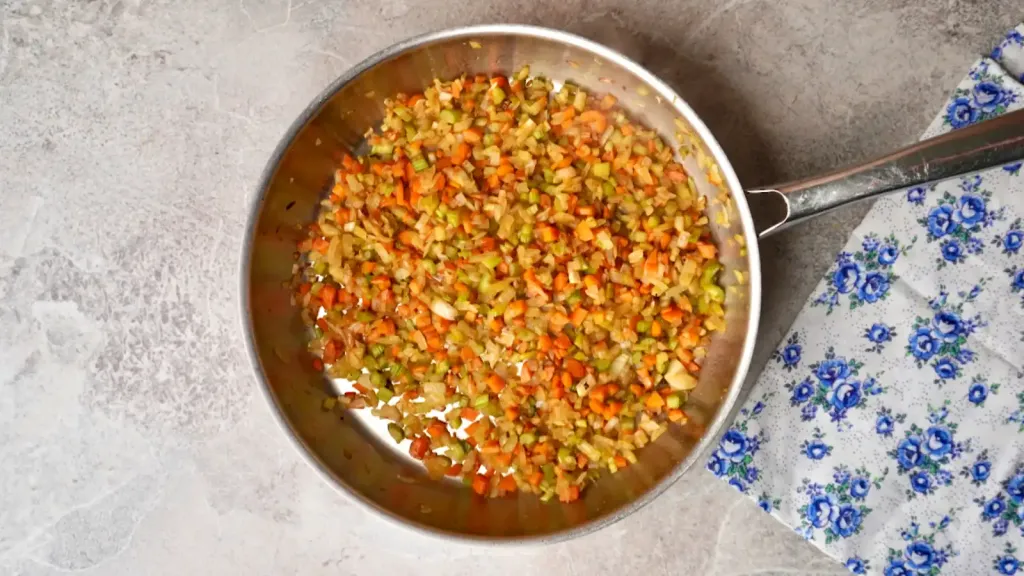
- If you're using dried TVP, soak it in hot, salted water according to the package instructions. Meanwhile, finely chop the onion, celery, carrots. If you're using other vegetables you can prepare them too.
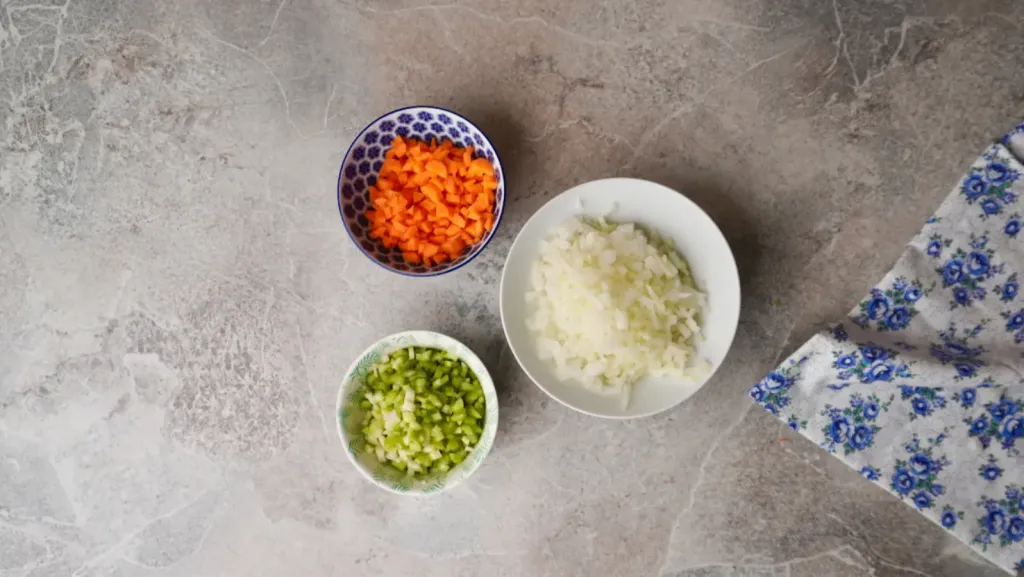
- Heat olive oil in a large pan or pot over medium-high heat and sauté the carrots and celery. Add the onions a minute later. Season generously with salt, as the tomato sauce will add plenty of liquid later.
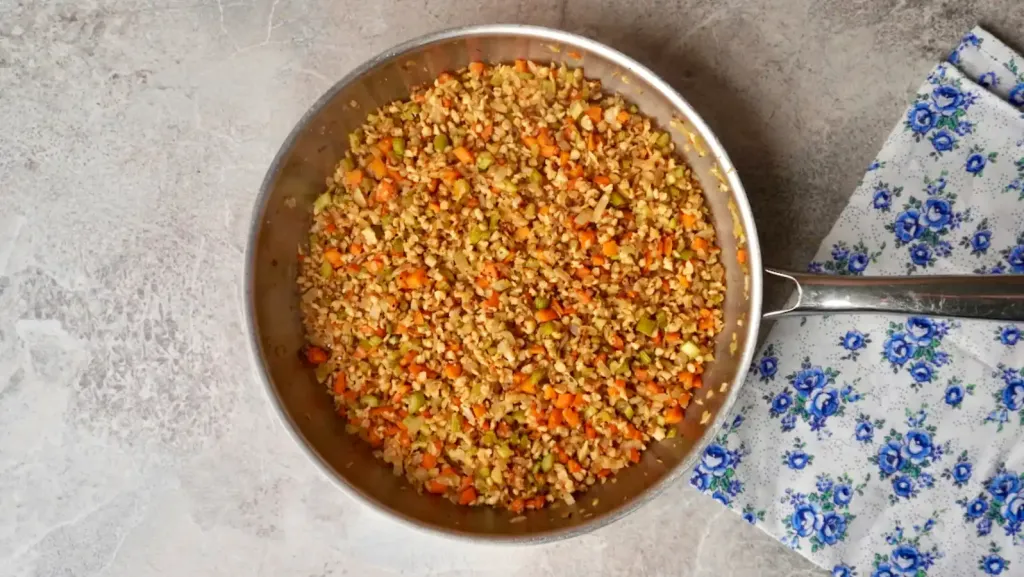
- Stir in the vegan mince or drained TVP and cook for another 5 minutes. It should release as much water as possible so it absorbs the flavours from the vegetables. Season with black pepper and adjust the salt if needed.
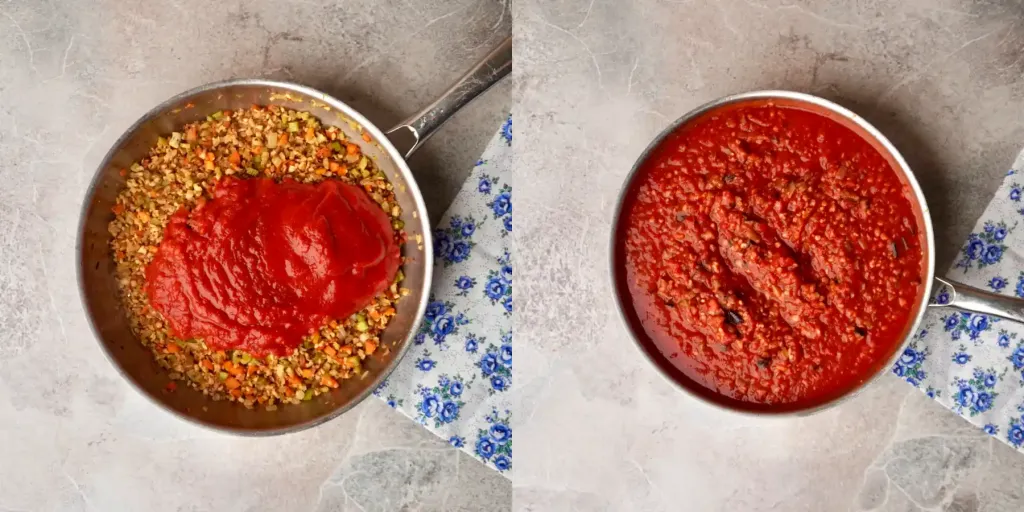
- Add the tomato sauce, stir well and cover with a lid. Let the sauce simmer gently over medium-low heat for about 20 minutes, stirring occasionally to prevent it from burning.
Bechamel Sauce
- If you're using cashews instead of cashew butter, blend them with the remaining milk and nutritional yeast until smooth.
- While the ragu simmers, melt the vegan butter in a saucepan. Increase the heat slightly, add the flour, and stir continuously until a smooth paste forms. Let it gently bubble for about 1 minute.
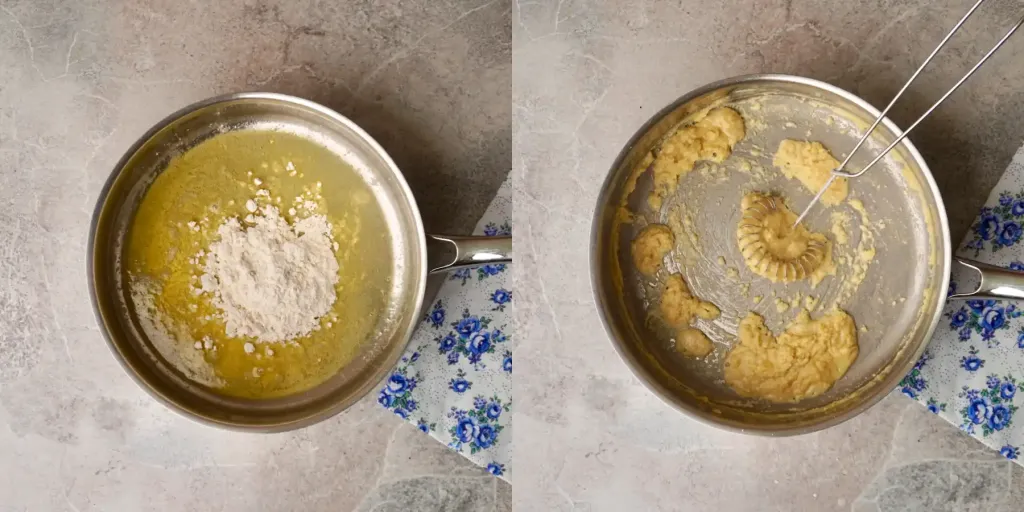
- Pour in about one quarter of the milk while whisking constantly. The mixture will become very thick. Keep whisking until completely smooth before adding another quarter of the milk. Starting with a thick paste makes it easier to avoid lumps.
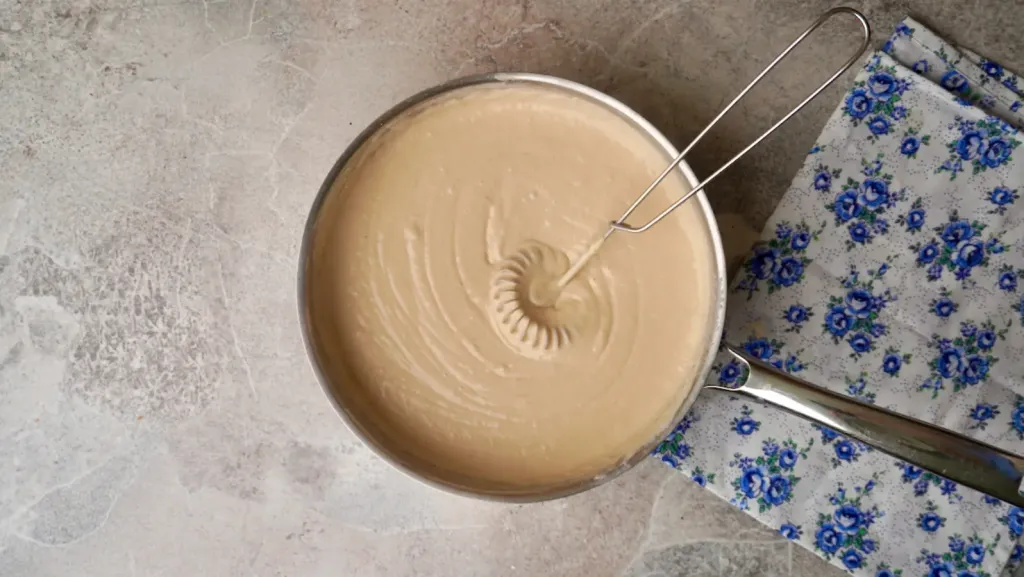
- Add the rest of the milk (or the cashew mixture), salt, pepper and a generous pinch of nutmeg to the saucepan. Bring everything back to a gentle simmer while stirring continuously. The finished sauce should be smooth, creamy and thick enough to generously coat the back of a spoon. Taste and adjust the salt and nutmeg.
Assembly
- Spread a few spoonfuls of ragu over the bottom of your baking dish. Add a layer of lasagna sheets, followed by ragu and béchamel. Repeat the layers until you've used all the filling. Finish with a final layer of pasta sheets and spread the remaining béchamel evenly over the top. Make sure to save enough béchamel for this last layer.
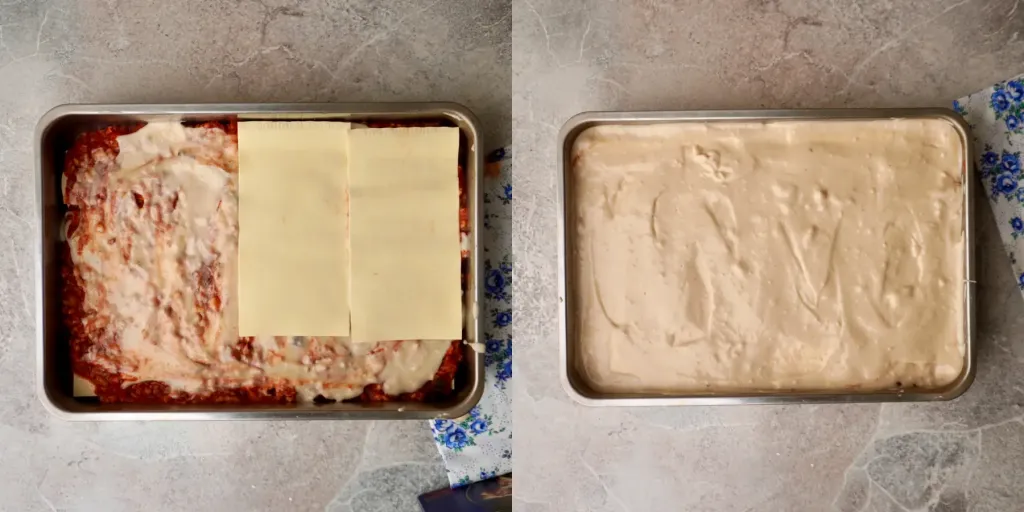
- Bake the lasagna according to the cooking time and temperature listed on your lasagna sheets. Different brands require different baking times, so following the package instructions will definitely give you the best result.
- Remove the lasagna from the oven and let it rest for at least 10 minutes before slicing. Enjoy!
Did you make this recipe?
Please let me know how it turned out for you, I’m super curious! You can leave a comment below and tag @lordsoftheplants on Instagram and hashtag it #lordsoftheplants for me to see too!
And if you enjoyed making this recipe, make sure to check out this simple, but incredibly delicious Fast and Easy Curry Tofu next.