
Experience the perfect balance of crisp and fluffy with this Italian Focaccia—
one bite and you’ll be hooked!
The Art of Italian Focaccia
Picture this: a golden crust that’s crisp on the outside and an airy, fluffy interior that practically melts in your mouth. Indeed, that’s the irresistible charm of authentic Italian Focaccia! Originating from Italy, focaccia is more than just a side dish served along a creamy tomato soup, it’s a canvas for culinary creativity. Whether you prefer the classic combination of rosemary and sea salt or the rich flavours of caramelised onions and olives, every bite bursts with deliciousness. Consequently, Focaccia becomes a versatile treat suitable for any occasion. Ready to dive into the art of focaccia? Let’s make your kitchen smell like an Italian bakery!
Main ingredients for Italian Focaccia
- Flour
- Water
- Olive Oil
- Sugar
- Yeast
- Potato
- Salt
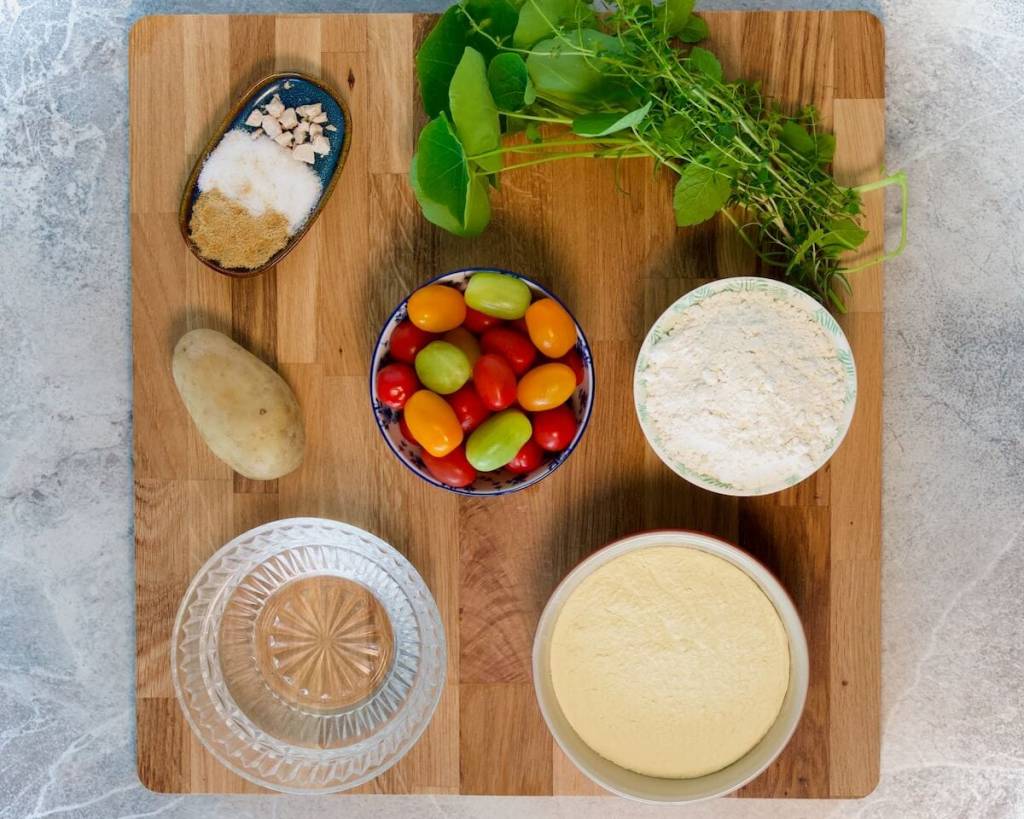
Here’s what makes Italian Focaccia truly magical:
- Basic Ingredients with a Twist: Focaccia starts with simple ingredients—flour, water, potato, yeast, salt, and olive oil. But it’s the quality of these ingredients that makes a difference. I always opt for extra-virgin olive oil to give the bread that rich, buttery flavour.
- Fluffy Perfection: The key to a fluffy focaccia is letting it rise. I let my dough rise twice: first, in the bowl, and then on the baking sheet. This extra rise ensures a light, airy texture that’s simply divine.
- Plentiful Customisation: Focaccia is incredibly versatile. You can top it with anything from rosemary and sea salt to olives and cherry tomatoes. I love experimenting with different toppings, and particularly enjoy adding different herbs from my herb garden.
- Italian Tradition: Focaccia is deeply rooted in Italian history. Its name comes from the Latin word “focus,” meaning hearth, reflecting its traditional baking method in a wood-fired oven. I like to think of it as a way to bring a slice of Italy into my home kitchen.
- Serving Suggestions: Fresh focaccia is perfect on its own or paired with soups, salads, and even as a sandwich base. I often serve it with a drizzle of balsamic glaze or dip it into Hummus or Baba Ganoush.
- Folding Technique: Folding the dough multiple times during the rise creates layers and a deliciously chewy texture.
- Perfect Baking Temperature: Baking at a high temperature ensures a crispy crust while keeping the interior soft and fluffy.
- Unique Rising Process: Letting the dough rise for several hours gives focaccia its airy, light texture. The extended rising time allows the flavours to develop fully.
Why I love using potatoes in my Focaccia
I once watched a documentary that showed that in the Liguria region of Italy a classic focaccia dough often includes a surprising ingredient: potato. This regional twist isn’t just a funky addition. It’s a cherished tradition that makes the bread incredibly moist and fluffy. The potato helps retain moisture, ensuring each bite is soft while subtly enhancing the flavour and I also find that it gives the bread a wonderful colour.
Which flours are the most suitable?
In my experience, using semolina flour and spelt flour in focaccia truly makes a difference. Firstly, semolina flour brings a lovely chewiness and structure. Thus, giving your focaccia that perfect, classic texture with a crisp crust and a soft, airy interior. Meanwhile, spelt flour adds a pleasant nutty flavour and helps keep the bread moist. Additionally, its higher fiber content enhances the bread with a richer taste and a better crumb. Incorporating these flours can elevate your focaccia to a new level of deliciousness.
Why is there olive oil in the dough?
Olive oil is absolutely crucial in making focaccia. It gives the bread that irresistible flavour and keeps it wonderfully moist. When you add olive oil, you get that perfect, crispy crust and a soft, airy crumb inside. It also helps to create those signature dimples in the dough. These are perfect for soaking up herbs, salt or any toppings you like. Plus, the oil helps the bread stay fresh longer.
What are suitable toppings?
Honestly, this is truly up to individual preferences. You can get creative and try different ones like:
- Rosemary and sea salt
- Olives
- Cherry tomatoes
- Garlic
- Onions
- Sun-dried tomatoes and fresh basil
- Caramelised shallots and balsamic glaze
- Artichoke hearts and lemon zest
- Mushrooms and thyme
- Asparagus and mint
How long should focaccia dough rise?
Ideally, you let it rise for up to 8 hours but at least 1 to 2, depending on how much time you have. You can let the dough rise up to 24 hours before baking. You could also make the dough in the evening and let it slowly rise over night in your fridge. In that case, be sure to cover your dough so not to let it dry out. I would recommend a first rise of at least 1 hour and then a second rise after shaping the dough in your baking pan. You then cover it and let it rise for another 30 to 60 mins, which ensures a fluffy texture.
Why should I fold the dough?
The folding technique for focaccia significantly enhances its texture and flavour. To begin, let the dough rise until it doubles in size. Typically, I allow my dough to rise for an hour before starting the folding process. Next, gently stretch and fold the dough over itself in thirds, creating layers. After each folding, let the dough rest for a short period before repeating the process. Ideally, you should perform this folding once an hour over a span of a few hours; in my case, around 6 hours. Once completed, shape the dough into your baking pan. This method imparts focaccia with its characteristic fluffiness and a beautifully uneven surface, perfect for absorbing olive oil and toppings.
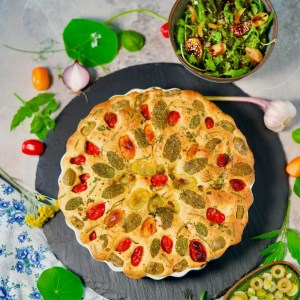
Epic Italian Focaccia – Super Fluffy and Easy to Make
Ingredients
- 1 potato
- 250 grams/ 2 cups (spelt) flour
- 350 grams/ 1 1/2 cups water
- 2 tbsp olive oil
- 5 grams fresh yeast
- 1 tsp sugar or maple/rice/agave syrup
- 250 grams/ 1 1/2 cups semolina
- 2 tsp salt (approximately 12 grams)
- 300 grams/ 2 cups cherry tomatoes
- herbs to your liking e.g.: mint, rosemary and thyme
Instructions
- Start by peeling, cutting and cooking the potatoes. The smaller you cut the pieces, the faster they will be ready to incorporate into the dough. While the potatoes cook, prepare a starter dough. For this, mix yeast, with sugar and 6 tbsp of water as well as 2 tbsp of flour.

- Once the potatoes are ready, mix all the ingredients. You can either do it manually or use a machine. I can recommend to mash the potatoes with a fork or masher first, this helps prevent bigger chunks to find their way into the dough.

- Let the dough rise at room temperature for an hour, cover it so that it does not dry out and stays moist. Once the dough has risen to double the size, start with folding it a few times. There is an explanation on how to do it above, so make sure to check that out. In case you have plenty of time I would suggest you fold the dough once every hour, for up to 6 hours. This is when I usually bake mine.

- Now that the initial rise is done, grease a baking pan with some olive oil (1 tbsp should suffice). I used a quiche pan as that is my favourite shape and size for my focaccia bread. Gently stretch the dough to fit the pan, ensuring it's evenly spread. Let it now rise for another 30 to 60 mins in the pan.
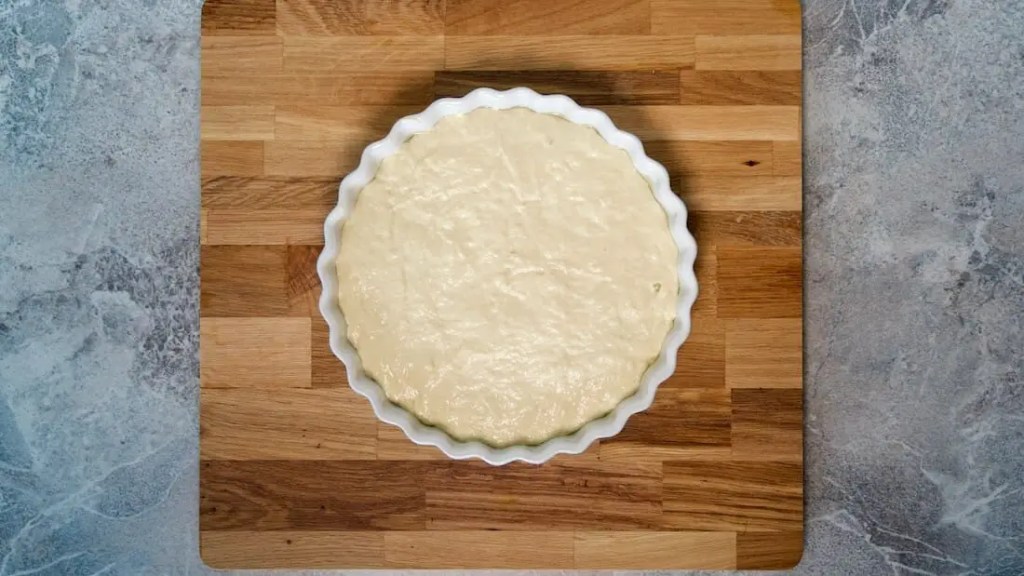
- Next, you want to dimple the dough. Using your fingers, press into the dough to create deep dimples all over the surface. Make your hands wet before you do that, this makes the process much easier.

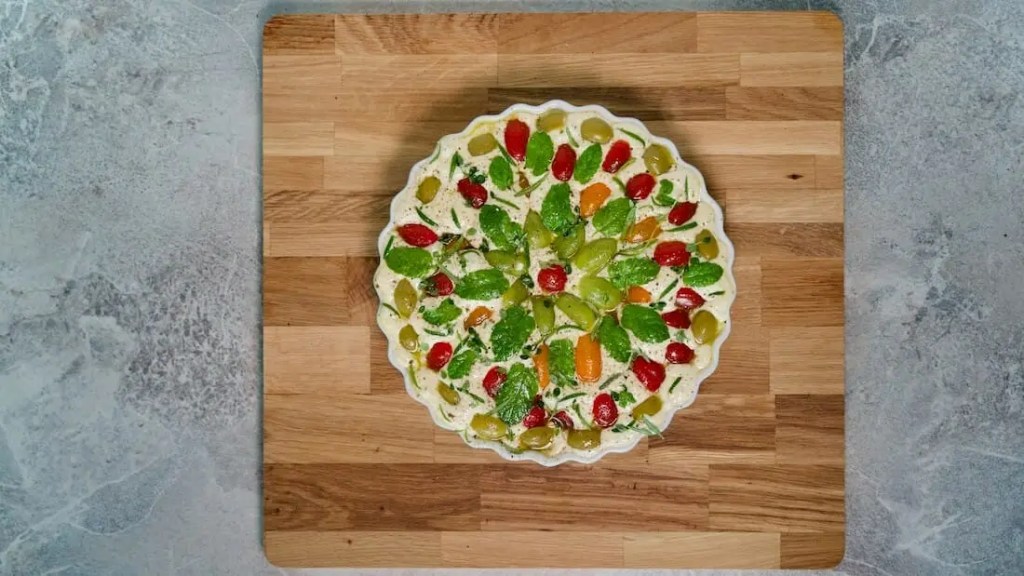
- Lastly, drizzle with olive oil, sprinkle with salt and pepper and add any desired toppings like rosemary or cherry tomatoes. I also used mint and lemon thyme. Olives are usually very tasty in focaccias too.
- Continue by preheating the oven to 220°C (430°F) and bake for 20-30 minutes until golden brown. Enjoy your lovely homemade piece of heaven!

What’s the best way to store my Italian Focaccia?
For short-term storage, wrap leftover focaccia in parchment paper or a kitchen towel. Keep it at room temperature for up to 2 days. However, for longer storage, freeze the focaccia by placing it in an airtight container with parchment paper. It can last up to 3 months in the freezer. To reheat, preheat your oven to 180°C (350°F) and warm the focaccia on a baking sheet for 5-10 minutes. Alternatively, heat it in a skillet over medium heat, covering it with a lid for a few minutes on each side. This ensures the focaccia retains its delicious texture and flavour.
Did you make this recipe?
Please let me know how it turned out for you, I’m super curious! You can leave a comment below and tag @lordsoftheplants on Instagram and hashtag it #lordsoftheplants for me to see 🙂
Leave a Reply